

Podium is our production-ready system for managing multiple replicated Fuseki databases at scale.
Podium is used in production by organisations that need high availability, repeatable updates, and confidence that every replica is consistent – even during heavy data ingestion or when datasets grow into the billions of triples.
Podium automates updates, synchronisation and operational management, giving organisations a robust, fault-tolerant way to publish and serve RDF data.
Podium is designed and maintained by Epimorphics and is available to license commercially.
A managed version will soon be available through AWS Marketplace.

Why Podium?
The Problem It Solves
Apache Jena Fuseki is a widely used, open-source SPARQL server trusted by organisations around the world. But while Fuseki excels as a standalone RDF store, running multiple Fuseki instances reliably, consistently and at scale requires additional infrastructure.
Podium provides exactly that. It turns Fuseki into a robust, fault-tolerant, cloud-ready component of a modern data platform.
Organisations using Fuseki often encounter the same challenges:
- Keeping multiple replicas up to date without downtime
- Managing large or frequent data updates reliably
- Monitoring and controlling publication flows
- Recovering quickly from failure or corruption
- Deploying Fuseki on modern cloud infrastructure
Podium solves these challenges by providing a coordinated system for publishing, distributing and applying updates across a fleet of Fuseki database replicas.
It removes operational complexity and ensures that every replica stays consistent, resilient, and ready for production workloads.
How Podium works
The main components of the Podium system are the Publisher, Manager and Workers.
Each Fuseki database replica is managed by a Podium Worker which initialises, maintains and updates its database.
Incoming SPARQL queries are automatically distributed across each of the available Workers, providing horizontal scaling. The Podium Publisher enables clients to publish updates and database images for Workers to apply.
Finally, the Podium Manager enables system operators to monitor and actively maintain the Podium system. All Podium features are provided as web APIs and can also be accessed via a command line interface (CLI).
Podium has been designed to be deployed in a Kubernetes cluster environment, providing easy scaling of Workers as needed to meet current demand.
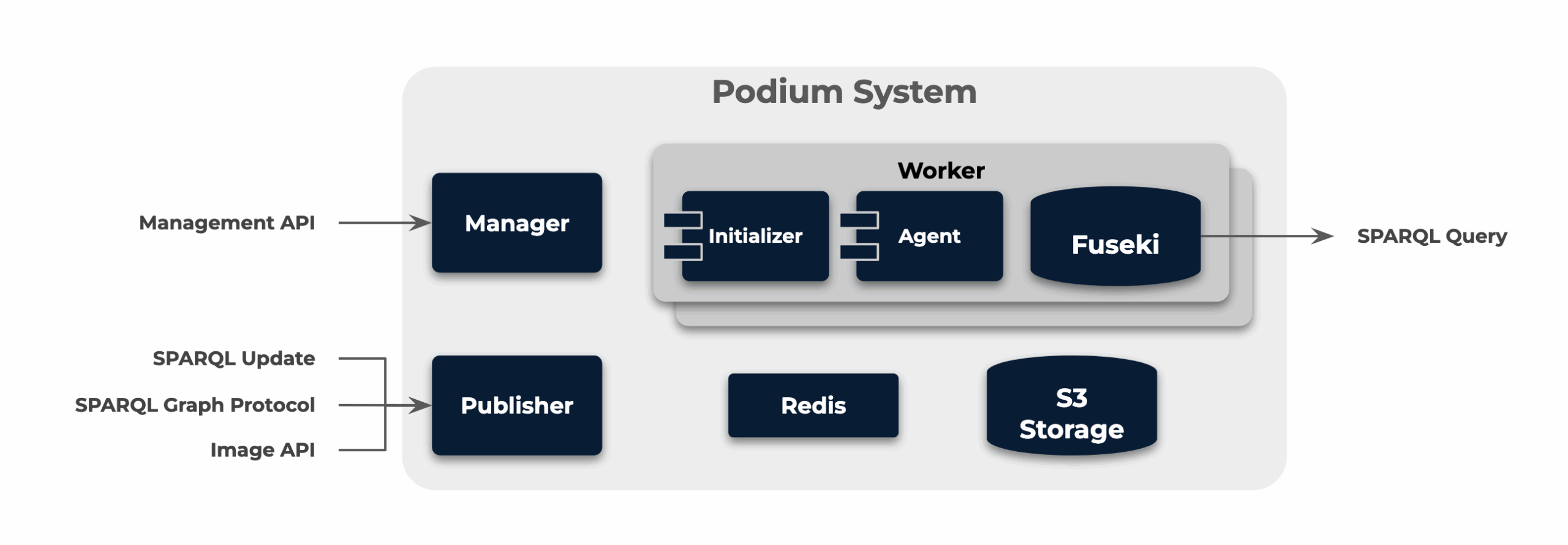
Podium is a cluster-ready update, replication and operations system
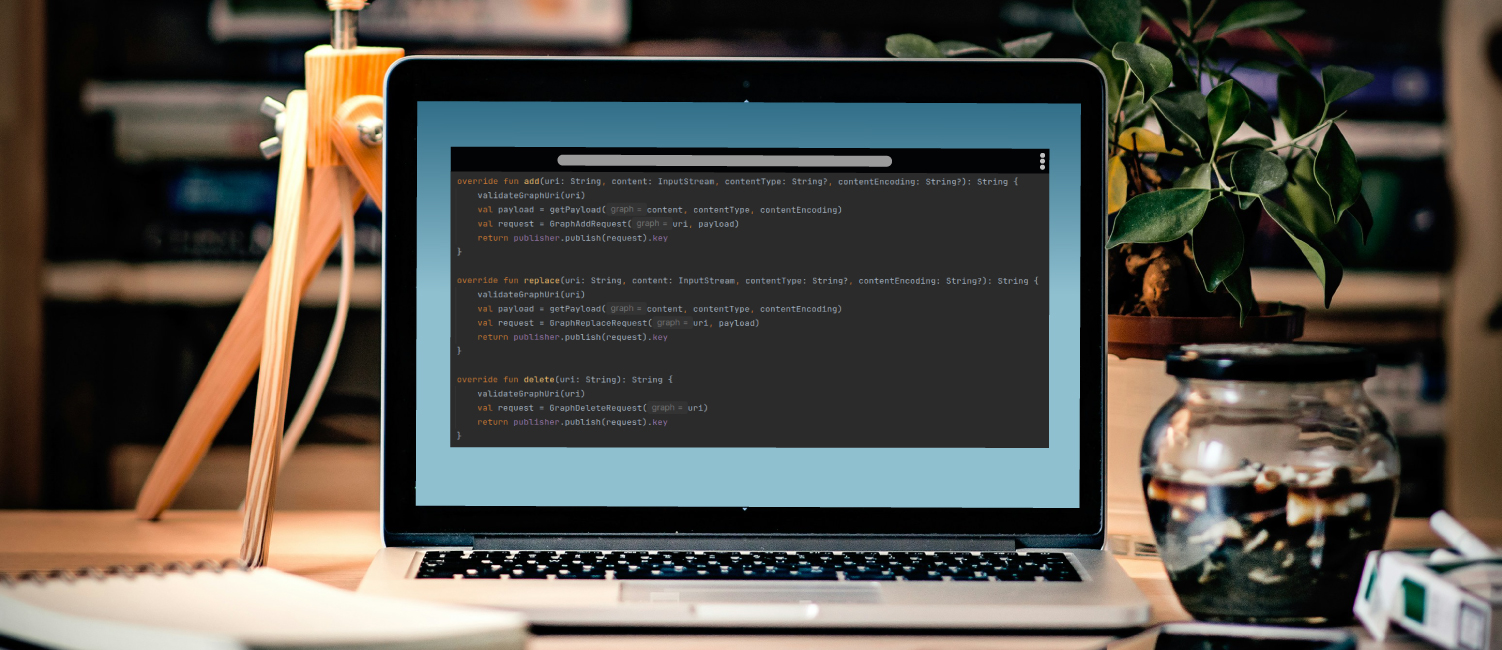
Podium lets you keep using the open-source Fuseki you already trust, while gaining the operational reliability and scale your users expect.
It is built specifically to extend Apache Jena Fuseki. It enhances what organisations already value about Fuseki – openness, standards and flexibility.
Podium uses Redis and Amazon S3 to provide durable, scalable coordination and storage, and is optimised for Kubernetes environments.
Podium adds the capabilities required for serious production use with:
- Coordinated publishing
- Consistent replication
- Self-healing updates
- Operational visibility
- Cloud-native deployment models
In short: Podium lets you keep using the open-source Fuseki you already trust, while gaining the operational reliability and scale your users expect.
Who Podium is for
For anyone building on Fuseki, Podium is the natural next step when moving from prototypes to dependable, production-scale systems.
Podium is ideal for organisations that:

Already use or plan to use Apache Jena Fuseki

Want to continue benefiting from an open-source, standards-based RDF stack

Need high availability, scalability and repeatability that Fuseki alone does not provide

Operate public-facing or mission-critical SPARQL services

Manage large or fast-moving datasets
